The Montessori Approach
Dawson Rusk
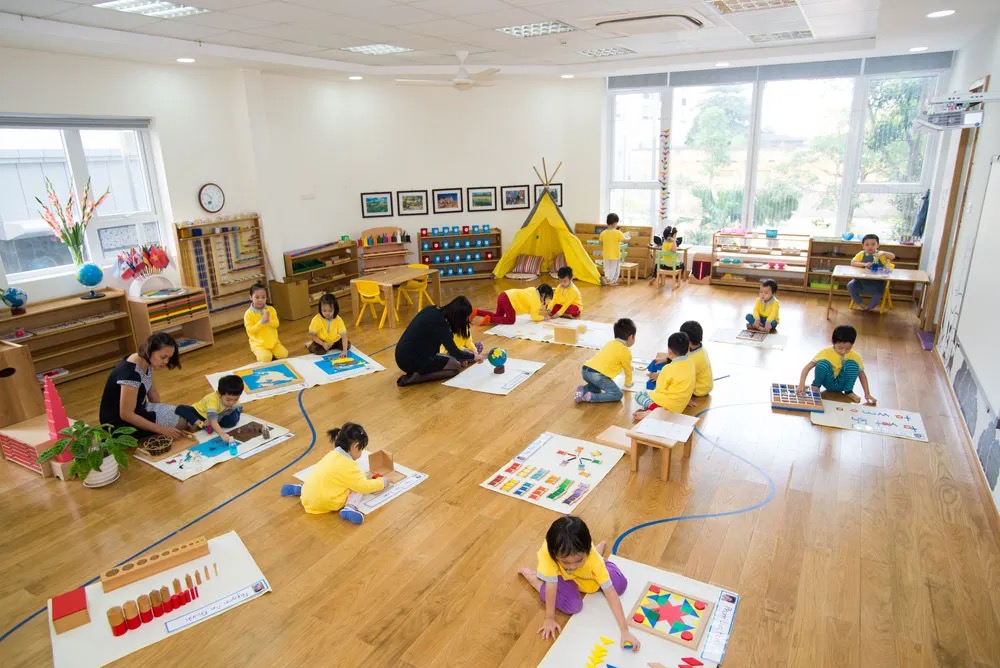
The Montessori approach emphasizes student freedom and independence in the classroom. By following this approach, will it enhance or impede student learning?
With my findings in mind, I can confidently say that the Montessori approach doesn’t impede student learning. Four out of my five sources were about studies done on comparing learning between students at Montessori Schools and Traditional Schools. The studies were also not limited to one specific area, as studies took place in New York, Italy, Milwaukee, and Indonesia. Looking at those included in the different studies, there were students in grades one, two, four, five, six, seven, eight, and ten. In the different studies, students were measured using their test scores in math and language arts, their answers when being tested on cognitive, academic, social, and behavioral skills, and what they said in interviews with researchers. They all found that students under the Montessori approach demonstrated comparable and or more enhanced learning than students at traditional schools. At the Montessori school in New York, marks were comparable to traditional schools. At the Montessori school in Italy, test scores were comparable to or better than those of traditional schools. In Milwaukee, student learning was greater at Montessori schools, as math and reading tests, positive peer interactions, executive control, and social cognition exceeded that of students learning at traditional schools (Lillard & Else-Quest, 2016). Results also showed that learning was more advanced because students at Montessori schools in Milwaukee wrote more creative essays, had sentences with more complex structure, cared about fairness and justice, and were more positive in social situations (Lillard & Else-Quest, 2016). In Indonesia, they found that Montessori education enhanced student learning more than traditional education, as Montessori helped more with cognitive development, higher achievement academically in language arts and math, and with social-emotional content (Mutmainna, et al, 2024).
When covering my other sources, it talks extensively about students. As a reader, I assumed that they meant neurotypical students. This led me to want to know whether the approach would also enhance the learning of neurodivergent students. For my fifth source, it was about the Montessori method and how it helps students with learning disabilities. It discussed how it helps students learn order and organization, development of attention, gross and fine motor skills, visual and auditory perception, oral language development and written language, mathematics, and personality (Pickering,1992).
Overall, I was able to really get to the bottom of my inquiry question. Under the Montessori approach, students demonstrated comparable and or more enhanced learning than students at traditional schools. This was true for students who were neurodivergent, neurotypical, in different grades and cultural backgrounds. I highly suggest that new teachers explore this approach in their classroom, and if it isn’t your thing, I suggest taking certain ideas and creating a hybrid approach.