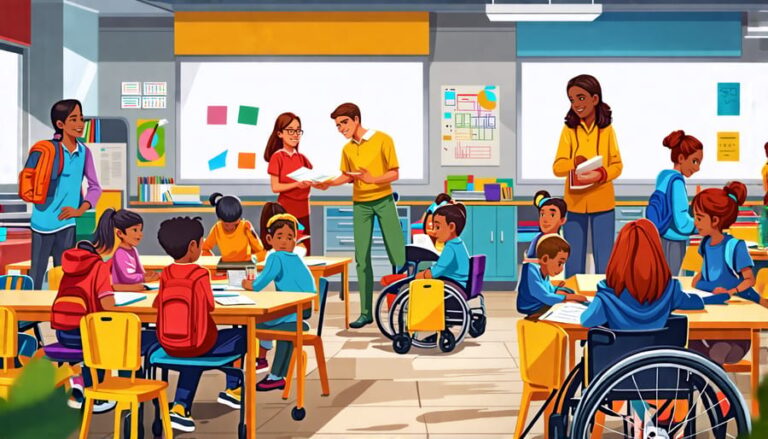
The Benefits and Potential Drawbacks of Inclusive Education.
Summer Schroeder
In my paper, I wrote about the inclusion of students with disabilities or diverse abilities into the classroom. My initial thoughts on the topic were that schools were trying to remove student support and resource rooms, instead deciding to follow an integration model of having the students try to fit a standard of learning, but labelling it as inclusion. However, after researching and looking into the topic, I learned that schools are not trying to remove student support and resource rooms. The purpose of including students with disabilities or diverse abilities in the classroom is to reduce stigma around these students and to reduce gaps in knowledge created when students are removed from the learning environment to be in the resource rooms. I found quite a few helpful resources from the British Columbia government website regarding the implementation of inclusive education in schools, as well as the duties and responsibilities of the board, administration, and educators. I also gathered useful information from the Educational Learning Theories: 3rd Edition textbook about experiential learning and how it can be used by educators to support students. The three strategies I wrote about in my paper were meant to help educators support an inclusive classroom and promote a positive learning environment. The strategies are working with a resource teacher to fill in gaps in learning, having tools and resources available to that student/students, and modelling inclusive behaviour. By using these strategies, educators can work to develop and support an inclusive classroom that is a safe space for all students.