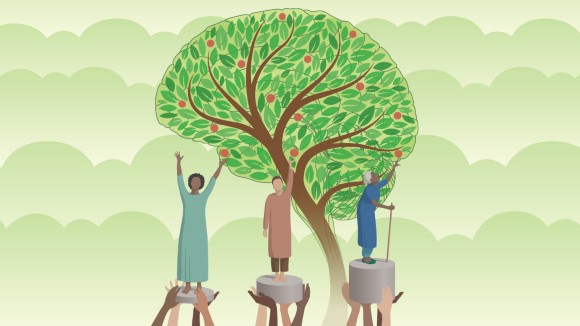

Inclusion Is Not a Limited Resource
Grace Bruno
When I first wondered whether focusing on inclusivity for one group of students might cause others to receive less attention, I was concerned about creating a balanced environment within the classroom. Teachers have limited time and resources so I believed that spending additional time and energy supporting individual students could lead to others receiving fewer opportunities. However, through my inquiry my understanding of this issue has changed.
A key takeaway from my findings is the difference between the terms equality and equity. Equality means treating all students the same, whereas equity means providing students with the specific supports they need to succeed. Before my research, I saw being attentive to each of my students as having to provide equal amounts of attention so that all students received a similar experience. Now, I believe that fairness in the education system is based on how well we respond to different learning needs.
Additionally, many of the researchers found that equitable and inclusive practices such as differentiated instruction, culturally responsive teaching, and universal design for learning are not just meant to benefit specific groups. Instead, they are designed to improve learning conditions for all students.
That said, my original concern is not entirely invalid. In real classroom settings teachers do face limitations when it comes to time, resources, and support. There may be moments when some students receive more direct attention than others.
Despite these challenges, my inquiry has led me to a conclusion: focusing on inclusivity for one group does not have to mean neglecting others. Inclusivity is not a finite resource that has to be budgeted, it is an approach that can improve learning environments for all students. The aim shouldn’t be to find an equal amount of time and/or attention for all students, but to create educational experiences that allow each student the chance to achieve success.